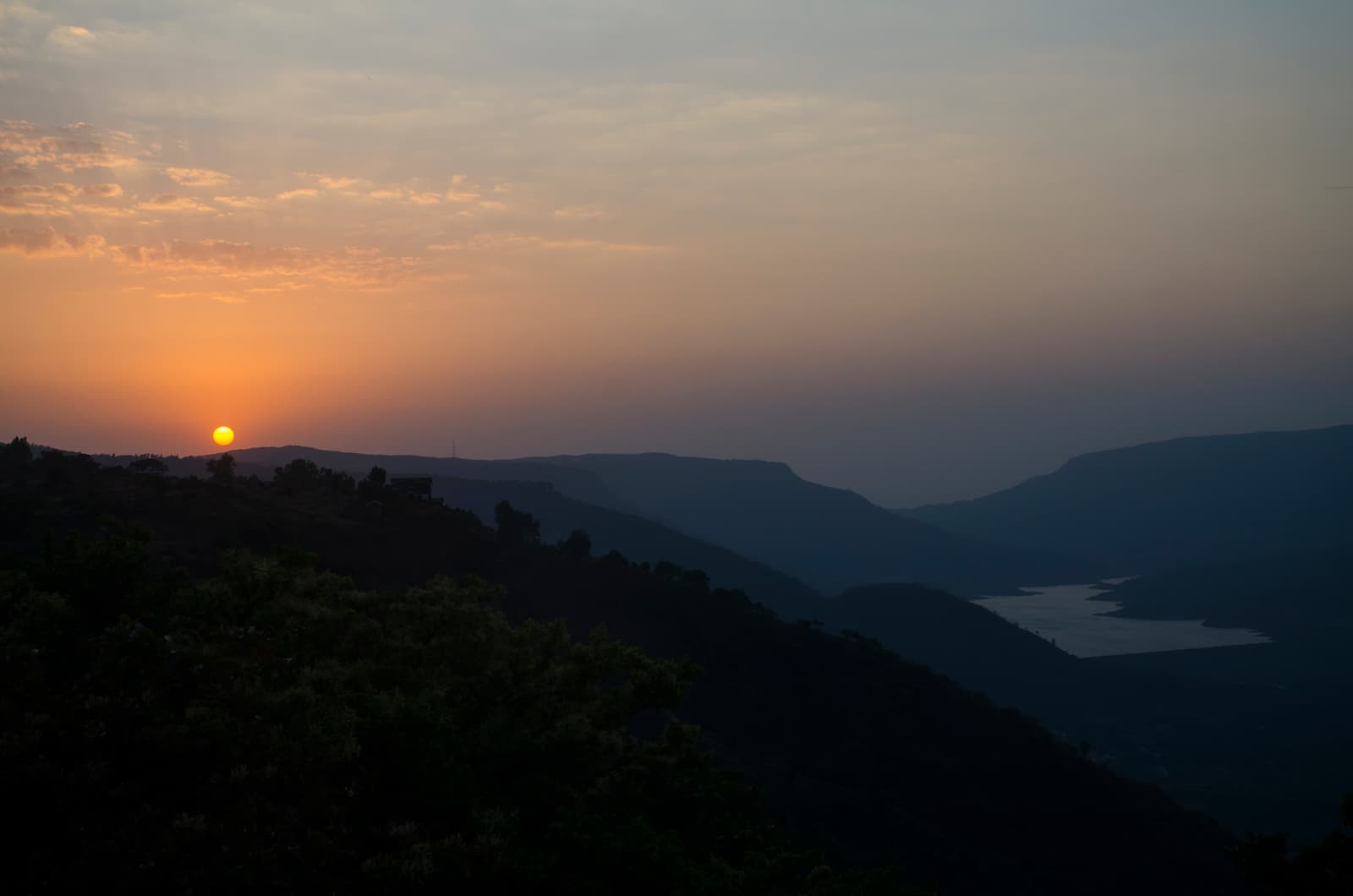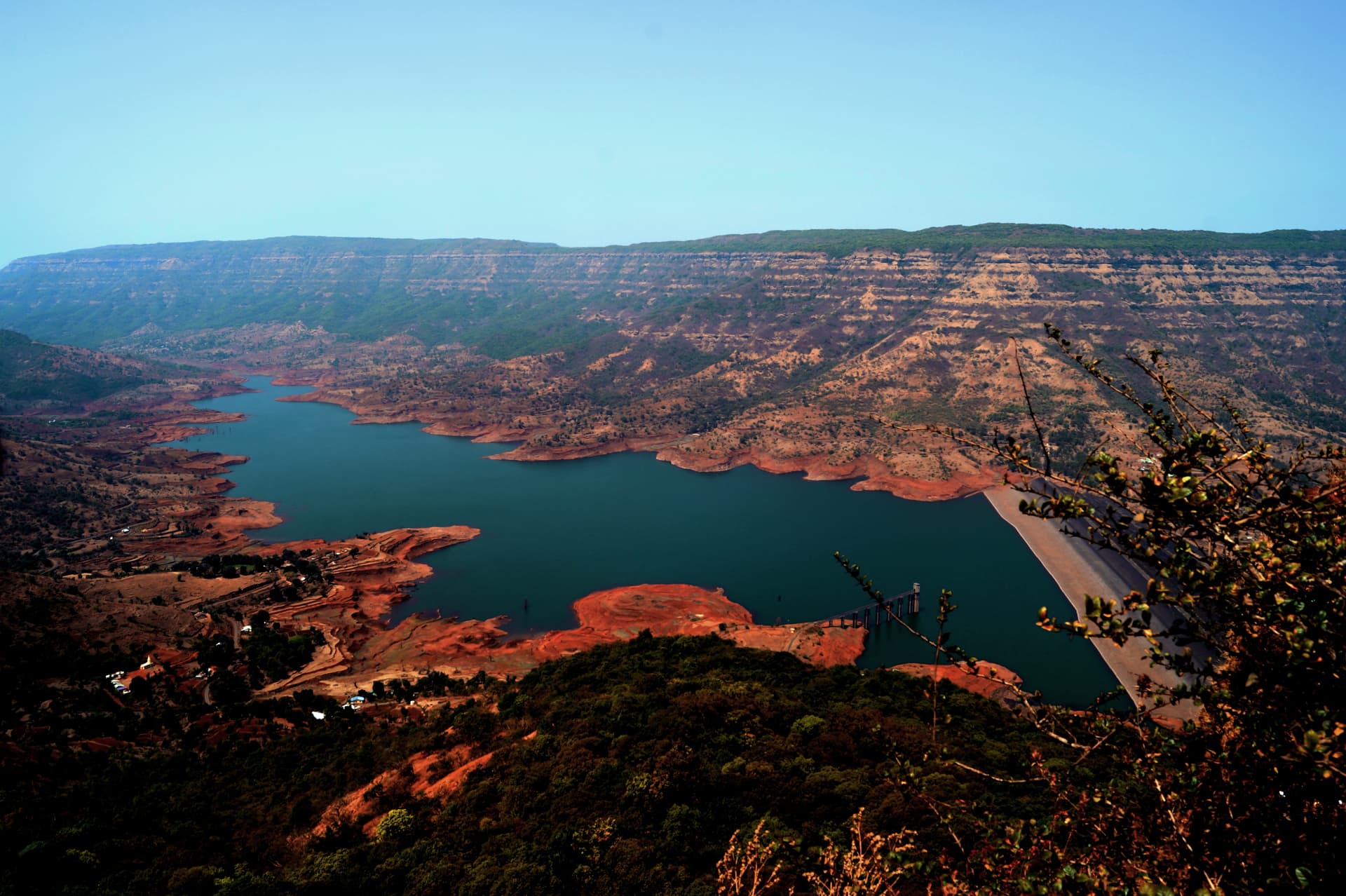
Mahabaleshwar is small — a market town on a plateau, surrounded by forest and cliffs — but there is more here than a weekend of viewpoints. This guide covers the essentials: when it all began, how long to stay, what to see, what to eat, and how to avoid the queues.
Mahabaleshwar at a glance
| Fact | Details |
|---|---|
| Location | Satara district, Maharashtra, in the Western Ghats (Sahyadri) |
| Altitude | About 1,350 m; Wilson Point is a little over 1,400 m |
| Nearest city | Pune, about 120 km (3–3.5 h by road) |
| Nearest stations | Wathar and Satara; Pune Junction for most trains |
| Best for | Viewpoints, cool weather, strawberries, forts, monsoon scenery |
| Languages | Marathi; Hindi and English widely understood |
| Currency | Indian rupee (₹); UPI and cards accepted widely |
 The viewpoints
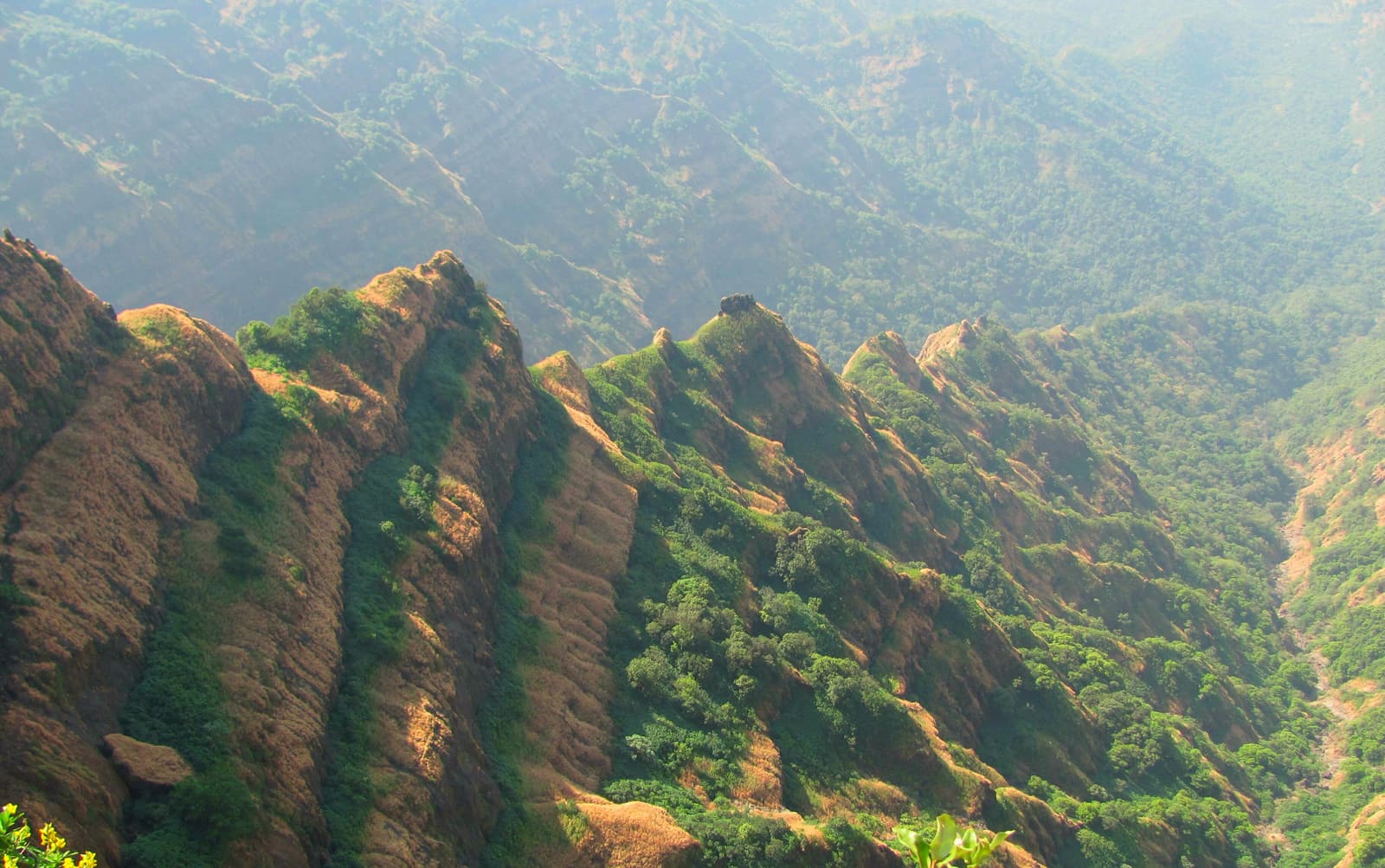
Arthur’s Seat
The “queen of points”
The most dramatic viewpoint in Mahabaleshwar: a narrow ridge where the plateau drops away into the Savitri valley and the Konkan beyond. On a clear morning you can trace the river towards the coast; in the monsoon, clouds boil up from below your feet.
 The viewpoints
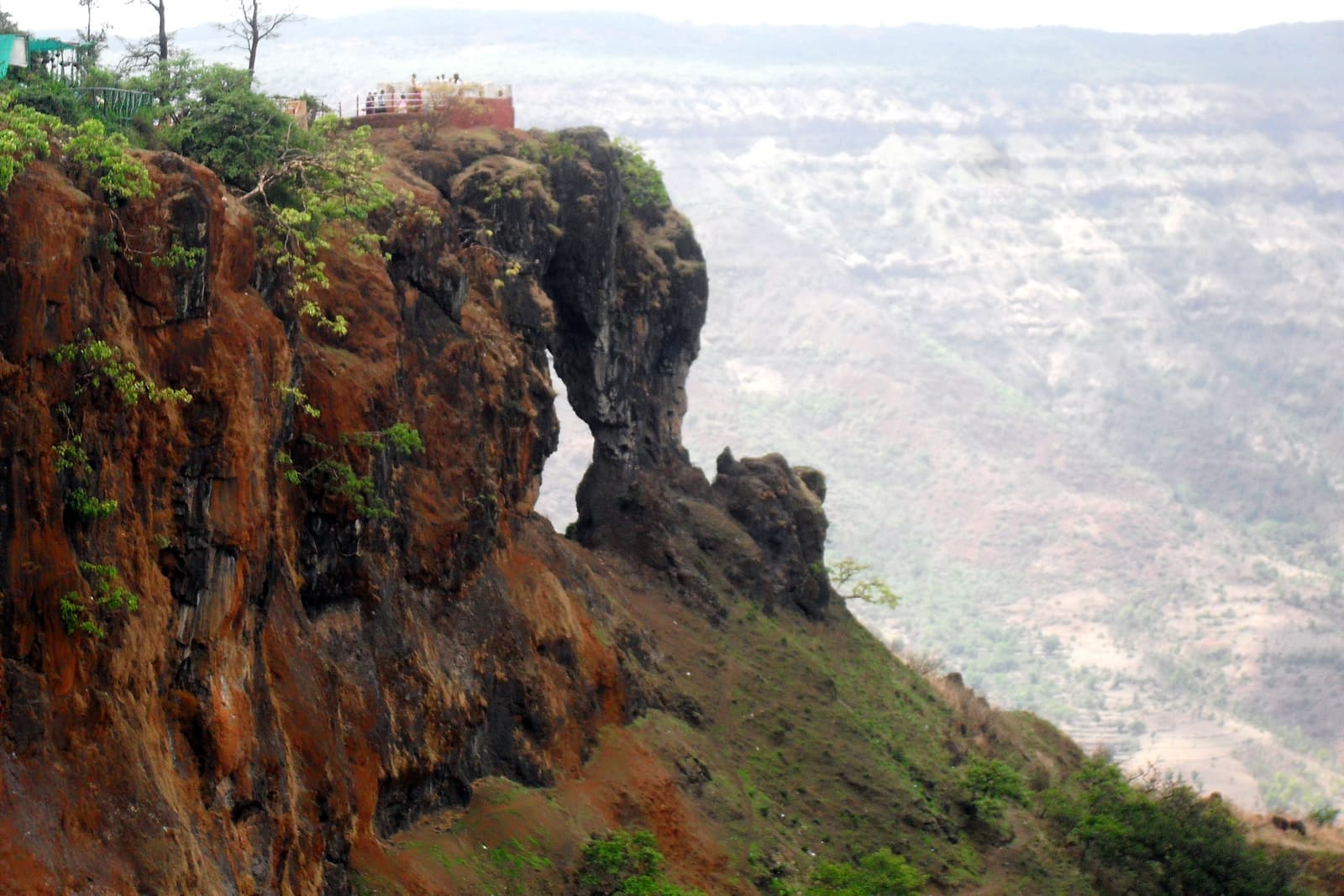
Kate’s Point & Needle Hole
Two reservoirs, one rock arch
A pair of neighbouring viewpoints on the eastern edge of the plateau. Kate’s Point looks down on the Krishna valley and the reservoirs of Dhom and Balkawadi; a few steps away, Needle Hole (Elephant’s Head) Point is a basalt fin pierced by a natural window.
 Lake, temples & town
Venna Lake
Boats, ponies and roasted corn
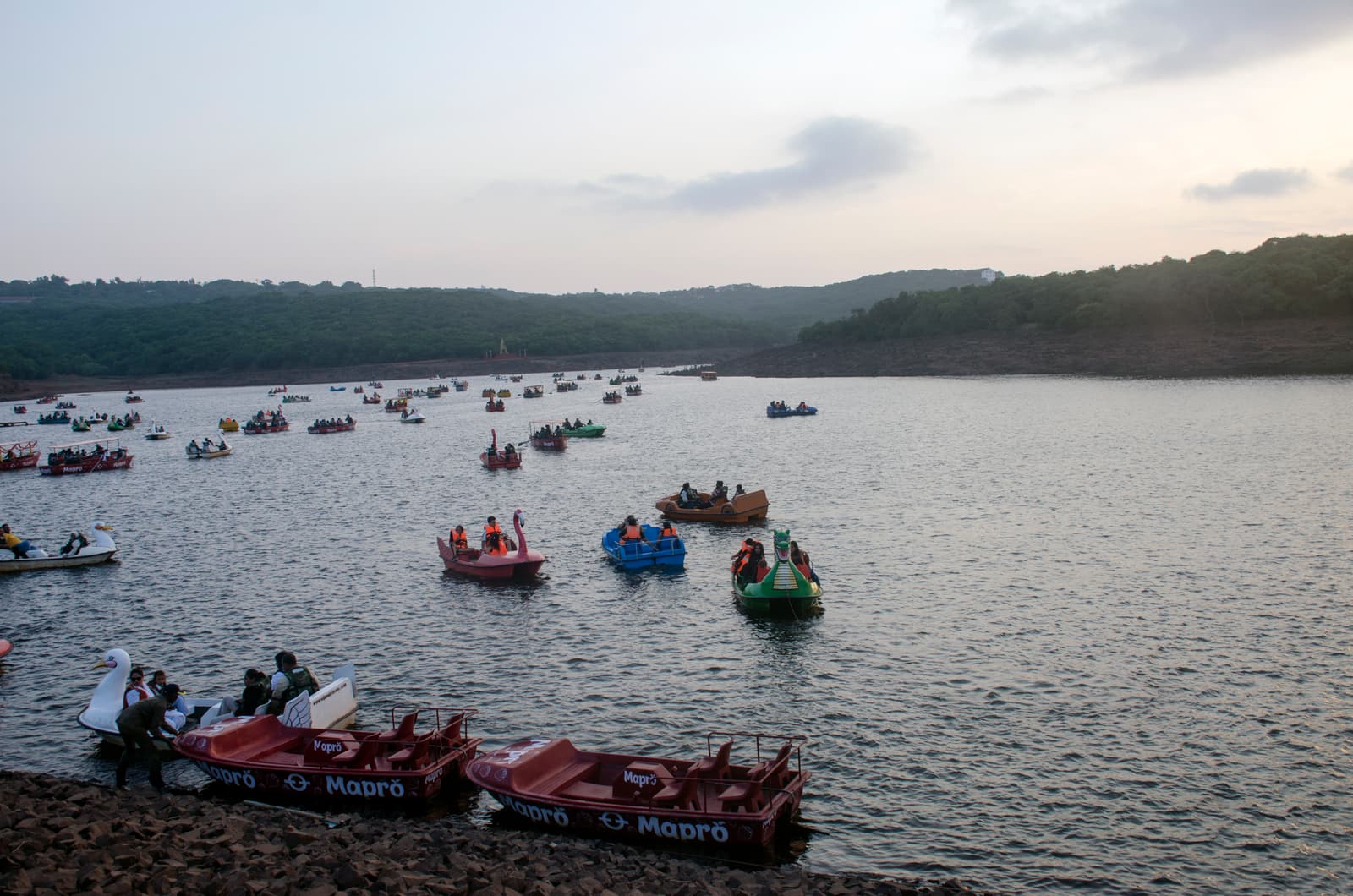
Mahabaleshwar’s social centre: a tree-fringed lake created in the 1840s, a few minutes from the bazaar. Hire a pedal or row boat, ride a pony along the bank, and eat hot corn and strawberries from the stalls as the evening mist rolls in.
 Lake, temples & town
Old Mahabaleshwar & the Krishna source
Where five rivers are born
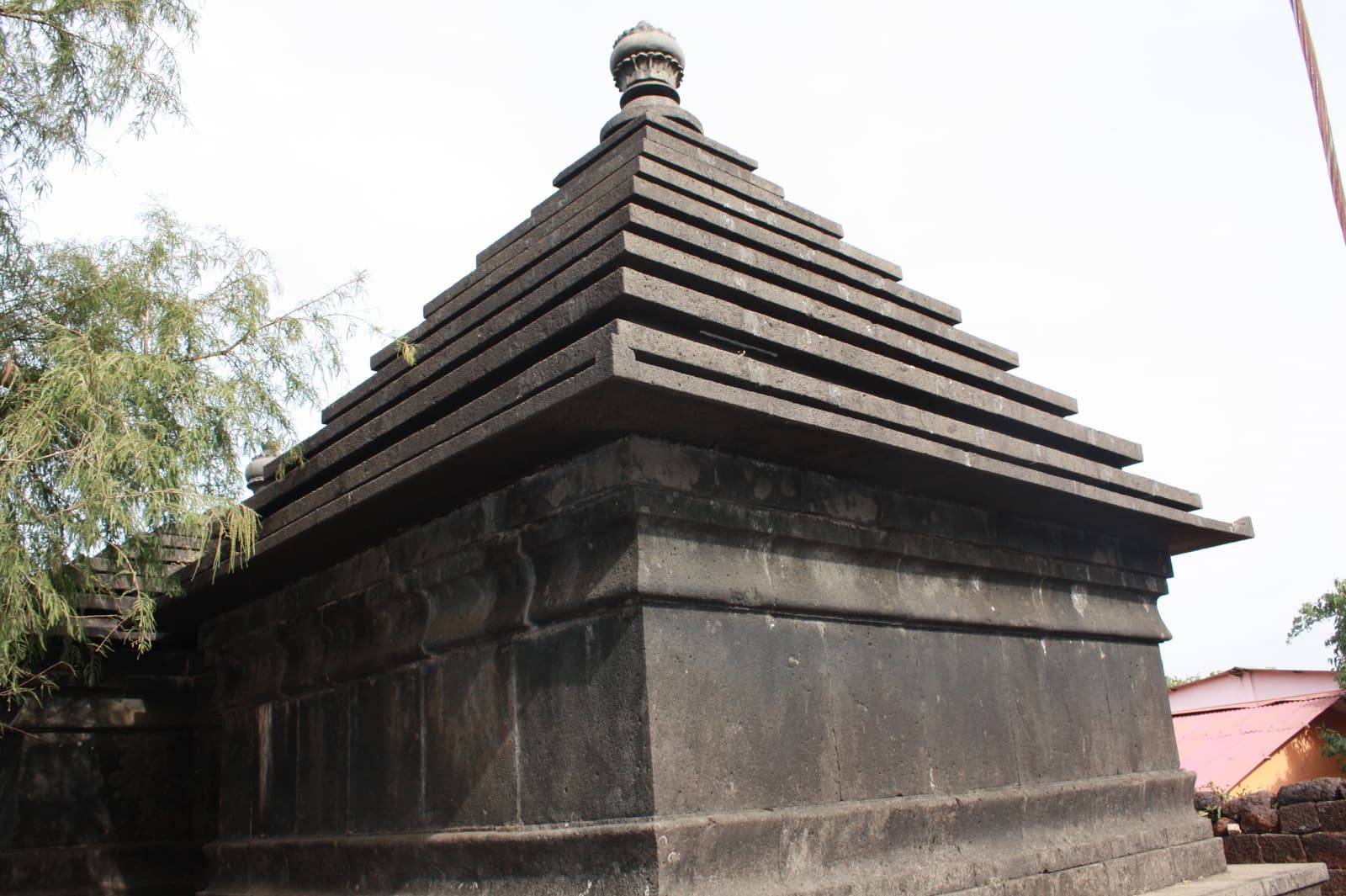
Long before the British hill station there was Kshetra Mahabaleshwar, a pilgrimage village of black-stone temples. The Mahabaleshwar temple enshrines a self-manifested Shiva lingam, and at the Panchganga temple five rivers — the Krishna among them — are said to rise together from a carved cow’s mouth.
A short history
Long before it was a hill station, Kshetra Mahabaleshwar was a place of pilgrimage. Its Shiva temple is traditionally dated to the 16th century and the More chiefs of Javli, and the nearby Panchganga temple marks the symbolic source of the Krishna and four other rivers. In 1656 Shivaji Maharaj took Javli and built Pratapgad to guard the pass to the Konkan.
The British arrived in the 1820s. Sir John Malcolm, Governor of Bombay, established a sanatorium here around 1828–29 — the market area is still officially called Malcolm Peth — and Mahabaleshwar became the summer capital of the Bombay Presidency. The officials who followed gave their names to the viewpoints: Arthur’s Seat, Elphinstone, Lodwick, Wilson. They also introduced crops such as strawberries, which went on to transform the local economy.
How many days do you need?
- One day: possible from Pune on a guided day trip — Panchgani, Mapro Garden, Arthur’s Seat, Venna Lake and a temple or fort.
- Two days: the sweet spot. Sunrise at Wilson Point, all the main points, Old Mahabaleshwar and Pratapgad, with an evening at Venna Lake.
- Three days or more: add Panchgani properly, Lingmala Falls, the Kaas Plateau in season, or the riverside temples of Wai.
What to see
The essentials are the western viewpoints (Arthur’s Seat, Elphinstone Point), the eastern ones (Kate’s Point and Needle Hole), sunrise at Wilson Point, Venna Lake, the temples of Old Mahabaleshwar and Pratapgad Fort. Panchgani, Mapro Garden, Lingmala Falls and the Kaas Plateau round out a longer stay.
Getting around
The easiest way to see the points is by local taxi. Drivers offer fixed-rate packages — a loop of the Mahabaleshwar points, a Pratapgad trip and a Panchgani trip are the standard three. Agree which points are included and the total price before setting off, and ask for early starts; most drivers are happy to go at dawn. Parking at the busiest points is limited on weekends, so a taxi can be quicker than driving yourself.
Food and drink
Mahabaleshwar’s signature is strawberries and cream, best from December to April. Also look for roasted corn and corn patties at Venna Lake, chikki (nut brittle) and fudge in the bazaar, and fruit crushes and jams from the local processors. For a proper meal, try a Maharashtrian thali, misal pav or pithla bhakri; the bazaar has vegetarian restaurants of every budget, and the resorts serve everything from Goan to continental.
Shopping
The main market is compact and walkable. Popular buys include strawberry and mulberry products, local honey, chikki and fudge, Kolhapuri-style leather chappals, canes and woollens. Prices in the bazaar are often fixed, but a little polite bargaining is normal at street stalls.
Money and connectivity
There are ATMs in the market, and UPI payments are accepted almost everywhere, even at many stalls. Carry some cash for parking, entry fees, taxis and small vendors. Mobile data works in town; coverage can drop at some viewpoints and in the forests.
Safety and etiquette
- Cliff edges: stay behind railings — laterite crumbles and fog hides the drop.
- Monkeys: bonnet macaques at viewpoints snatch food and bags. Keep snacks out of sight.
- Roads: ghat roads are narrow and winding; avoid driving in thick fog or after dark.
- Monsoon: leeches in the forest, slippery trails and occasional landslides. Wear proper shoes.
- Temples: dress modestly, remove shoes and ask before taking photos inside.
- Environment: Mahabaleshwar–Panchgani is an eco-sensitive zone. Carry litter out and avoid single-use plastic.
What to pack
- A warm layer for mornings and evenings (essential from November to February).
- A light rain jacket and umbrella — essential June–September, useful any time.
- Shoes with grip for Pratapgad’s steps and forest trails.
- Sunscreen, a hat and water for Table Land and the fort.
- A torch for pre-dawn starts to Wilson Point.
Sample two-day itinerary
Day 1: leave Pune early; stop at Wai’s Menavali ghat, then Panchgani’s Table Land and Mapro Garden. Check in, then spend sunset at Venna Lake and the evening in the bazaar.
Day 2: sunrise at Wilson Point; breakfast in town; Old Mahabaleshwar’s temples, Arthur’s Seat and Elphinstone Point; lunch; Pratapgad Fort in the afternoon; strawberries and cream before the drive home.